MIP at European Hydrogen Week 2026: From the Path to Self-Sufficiency to Specific Market Issues
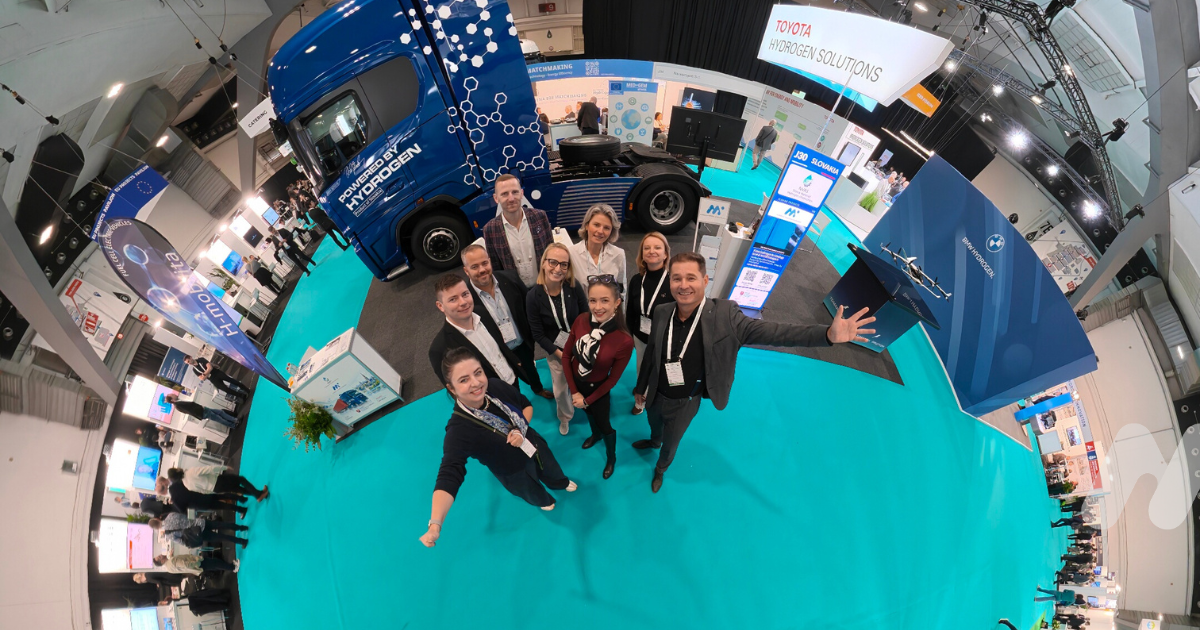
When our hydrogen-powered truck arrived at European Hydrogen Week 2026 in Brussels, the first conversations at our booth often didn’t start with the question of what was under the hood.
They started with the sentence: “We saw your video on LinkedIn.”
Visitors were familiar with the truck’s route from Horná Potôň to Brussels. They knew it hadn’t arrived on a transporter but had driven there under its own power. In the video, they saw its journey across Europe, hydrogen refueling, charging, and rest stops.
For us, it was one of the most interesting moments of the entire exhibition. For some of the visitors, the truck was no longer an unfamiliar exhibit. They approached it with a sense of context and specific questions.
The trip to Brussels kicked off the first round of talks
We documented our trip to European Hydrogen Week as it unfolded. It wasn’t just about transporting the vehicle to the exhibition. We wanted to show what a trip like this looks like in practice.
It was precisely these topics that were then naturally discussed in one-on-one conversations in Brussels. Visitors were interested in hydrogen refueling, charging, range, route planning, and the actual operation of the vehicle on European roads.
Interest in the trip quickly shifted from the video to technical and operational topics.
The questions were no longer just about whether the truck worked
European Hydrogen Week also showed us what issues people are grappling with today when it comes to hydrogen mobility.
Over the course of three days, questions such as the following came up repeatedly:
- 🔹 When will it be possible to order a solution like this?
- 🔹 How can a test run be arranged?
- 🔹 What are the requirements for refueling with hydrogen at public stations?
- 🔹 What are the requirements for the refueling process itself,
- 🔹 Why did we choose a fuel cell instead of hydrogen combustion?
- 🔹 what real-world operation and the vehicle’s energy management look like.
There isn’t a single, universal answer for each of these topics. Requirements may vary depending on the country, the type of infrastructure, the project, or the specific mode of operation.
However, something else was important to us: the discussions delved into specific technical and operational details. That is precisely the level at which we begin to talk about the real-world application of the technology.
Why fuel cells and electric propulsion?
One of the topics discussed was the architecture of the hydrogen propulsion system itself. Visitors asked why the truck uses a fuel cell rather than a hydrogen-powered internal combustion engine.
In the MIP solution, hydrogen serves as the energy source. The fuel cell converts its energy into electricity, and an electric drive provides propulsion. At the same time, the battery manages the system’s energy and power requirements.
We explain the functioning of this architecture in more detail in the article on the hydrogen propulsion system.
Interest came from various parts of the European hydrogen community
It wasn’t just carriers or visitors interested in vehicles who stopped by the truck.
We also spoke with senior representatives of the European hydrogen sector and with a European Commission official working in the field of decarbonization.
These conversations also showed that when it comes to hydrogen mobility, the focus isn’t just on individual components. The topics increasingly revolve around the availability of solutions, infrastructure, operations, and deployment opportunities in specific applications.
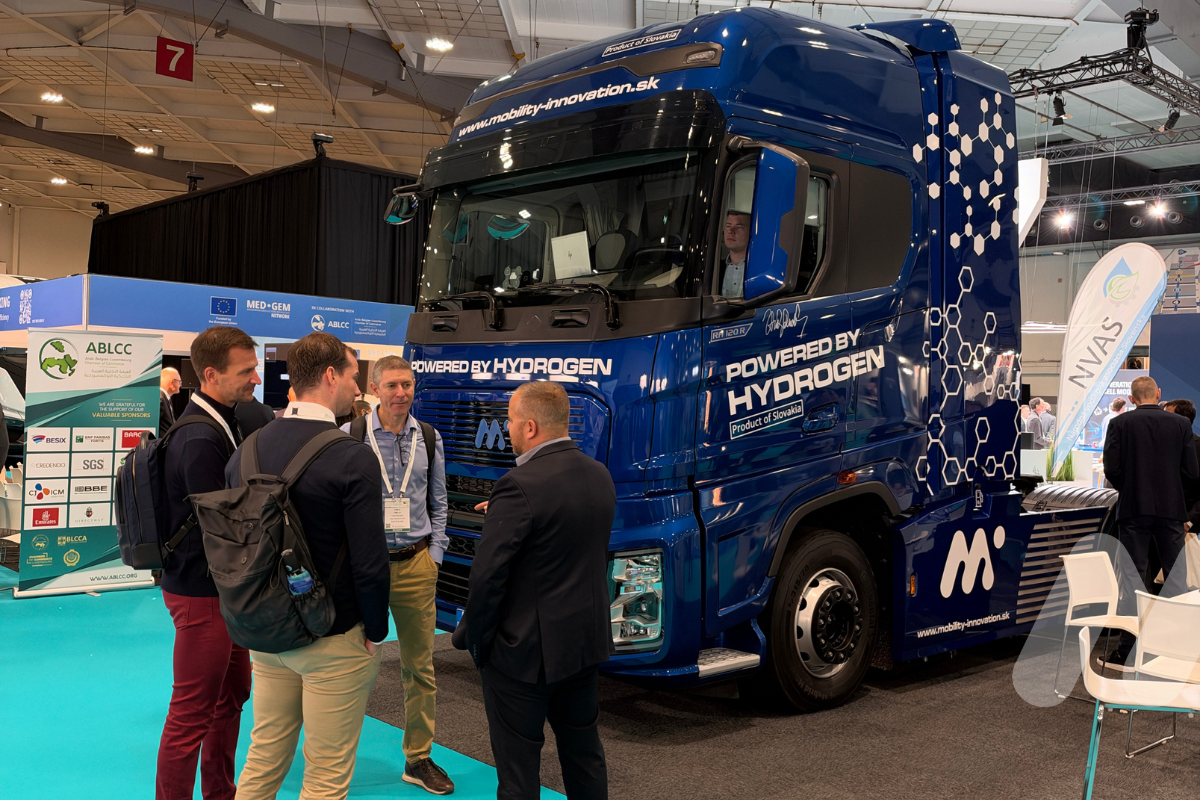
MIP hydrogen truck at European Hydrogen Week 2026
European Hydrogen Week is much broader than just mobility
The three days spent visiting the booths also highlighted the breadth of the European hydrogen ecosystem. Hydrogen is being addressed in the fields of mobility, energy, infrastructure, and industry. The projects vary in size, technological architecture, and stage of development.
For MIP, the phase in which a specific technology must be integrated into a specific application is particularly crucial.
For a hydrogen propulsion system, this means designing and integrating a fuel cell, a high-pressure hydrogen system, a battery, an electric motor, power management, software, diagnostics, and safety features in accordance with the requirements of the specific platform.
Comprehensive system integration is precisely the area in which MIP works with vehicle manufacturers, technology partners, and customers who need to incorporate zero-emission propulsion into their applications. You can also learn more about our approach in the article on vehicle system integration.
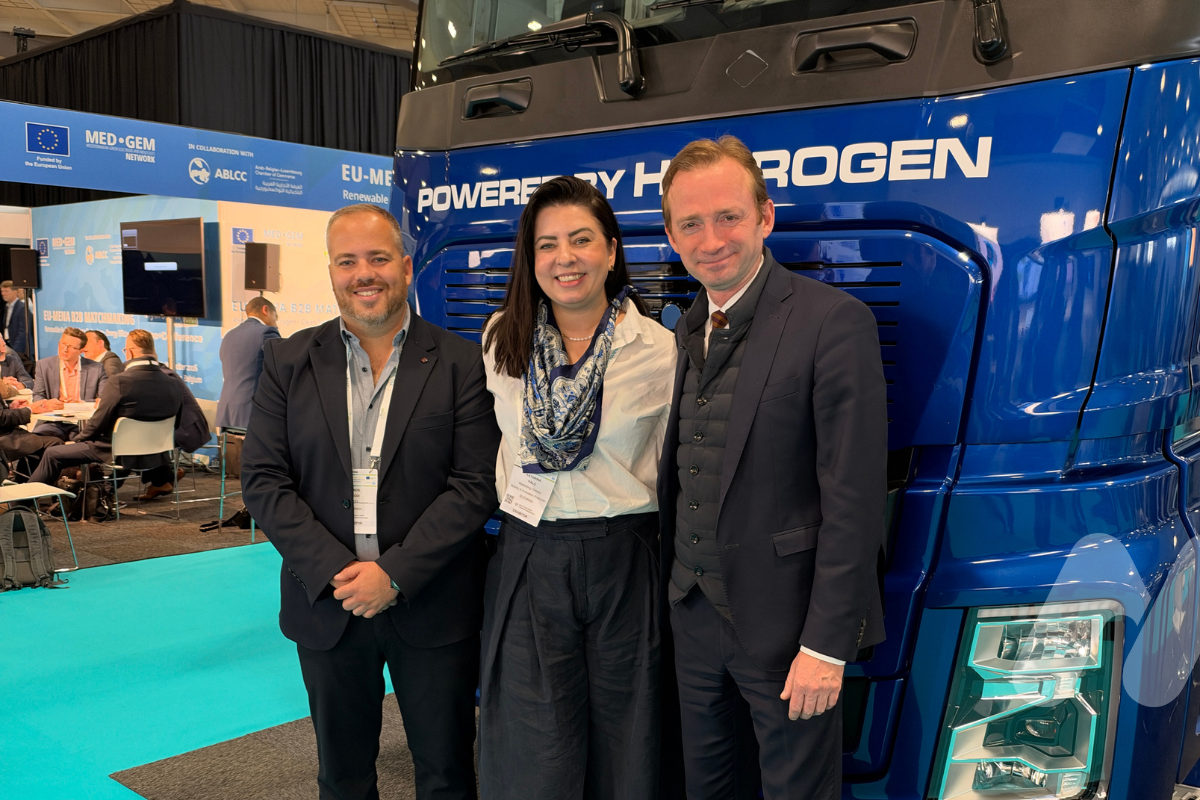
MIP with the Slovak Ambassador at European Hydrogen Week 2026
Slovak know-how all in one booth
European Hydrogen Week also served as a joint showcase of Slovakia’s expertise.
We set up the Slovak booth together with NVAS—the National Hydrogen Association of Slovakia, TOMARK PROTON, the Slovak Academy of Sciences, and ILF Consulting Engineers.
Each brought a different area of expertise and a different perspective on hydrogen technologies. The shared space also served as a venue for discussions among companies, research institutions, and visitors from various countries.
We would like to thank the Embassy of the Slovak Republic in Brussels for its support of the Slovak booth. We also greatly appreciate the ambassador’s personal participation during the exhibition.
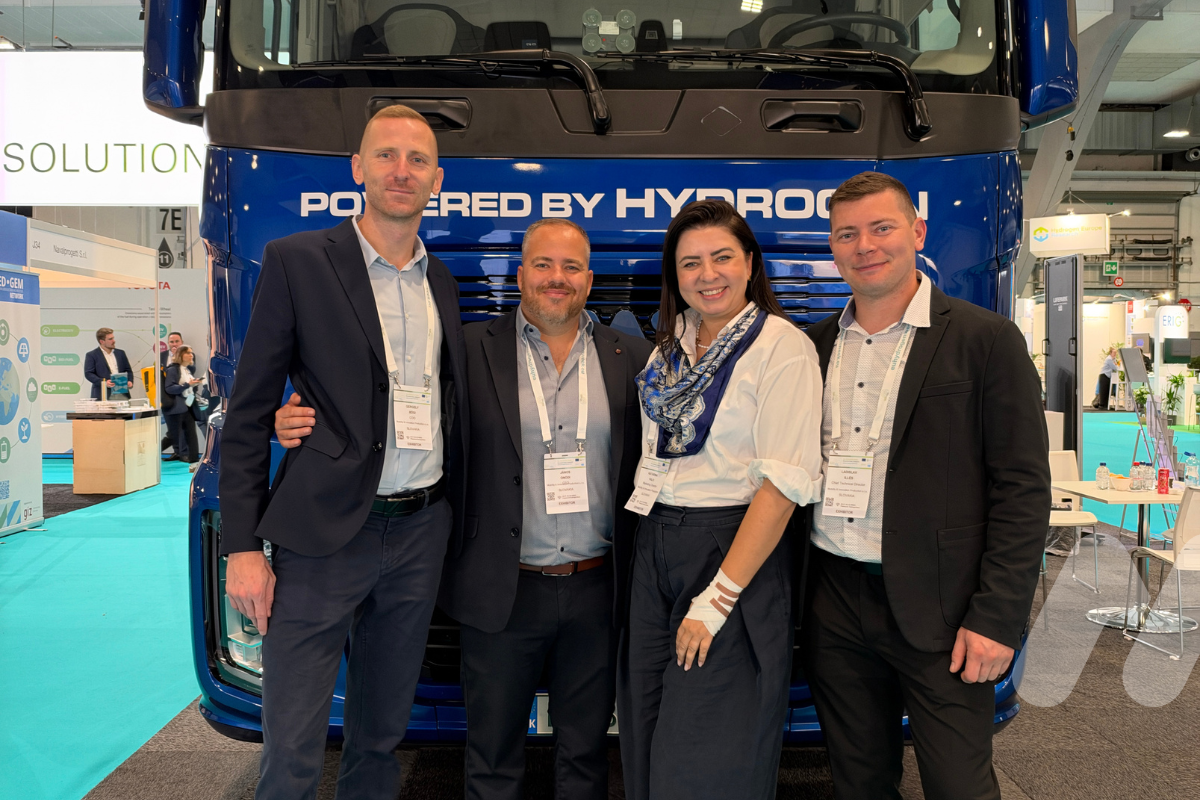
The MIP Team at European Hydrogen Week 2026
What We Take Away from Brussels
We arrived in Brussels with a hydrogen-powered truck that had traveled from Horná Potôň along European roads.
We returned home with new contacts and, above all, with concrete technical and business discussions. At the same time, the questions we received at the exhibition showed us what people need to know today about hydrogen mobility before they start considering a real-world project.
And it is precisely these issues that we want to continue to incorporate into our communication—from operations and infrastructure to the system integration of specific applications.
Are you working on a project in which you want to integrate a hydrogen or other zero-emission powertrain into your own platform?
MIP covers the entire process—from feasibility studies and architectural design through system integration and testing to documentation and preparation of the solution for certification or type approval.
