Hydrogen Propulsion System: How Hydrogen, Fuel Cells, and Electric Propulsion Work Together
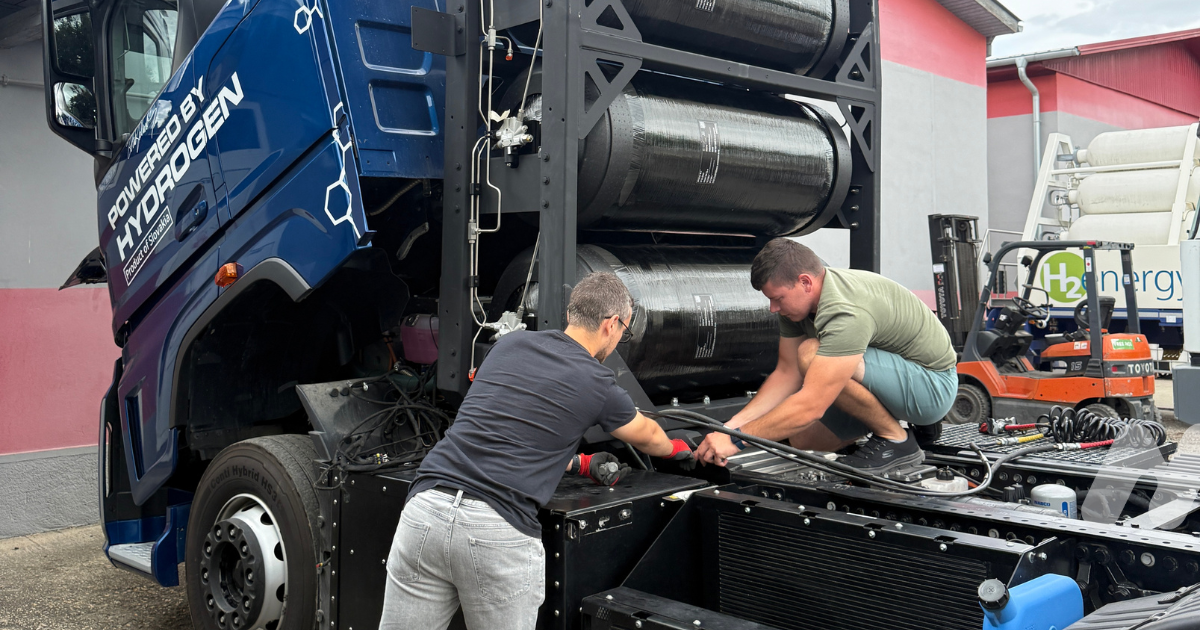
A hydrogen propulsion system is not a “hydrogen engine.”
When discussing hydrogen solutions, a simplified term is often used that can give rise to misconceptions. In such a system, hydrogen does not directly power a vehicle or machine mechanically. It serves as an energy source.
A fuel cell converts hydrogen into electricity. This electricity is then used by an electric drive system, which provides the actual propulsion. Therefore, a hydrogen propulsion system is closer to an electric drive system with a specific energy source than to a conventional internal combustion engine.
It is precisely this distinction that is important in design, integration, and technical communication. A hydrogen solution is not a single component. It is a system of multiple parts that must work together as a single unit.
Hydrogen provides energy. The electric drive provides propulsion. Integration determines how the entire system works in practice.
Why a hydrogen-powered vehicle isn’t a “hydrogen engine”
In a conventional internal combustion engine, fuel enters a process that directly generates mechanical energy. A hydrogen propulsion system works differently. Hydrogen does not enter the propulsion system as a conventional fuel does in an internal combustion engine.
Its role is to supply energy for electricity generation. This conversion is carried out by a fuel cell. The electricity then powers an electric drive system, which propels a vehicle, machine, or other technological platform.
From a technical standpoint, therefore, it is not enough to simply refer to a “hydrogen powertrain.” It is more accurate to understand it as an electric powertrain in which hydrogen serves as the energy source.
This designation is not a minor detail. It affects the entire system design. If the drive is electric, the electrical architecture, battery, power management, software, safety logic, diagnostics, and communication between the individual components must be addressed.
Hydrogen as an Energy Source
In such a system, hydrogen serves as an energy carrier. The system uses it to generate electricity, not for direct mechanical motion.
This principle is particularly important in applications where it is not enough to address the electric drive itself. The project must also take into account hydrogen storage, high pressure, safety, monitoring, gas flow, connection to the fuel cell, and control of the entire energy flow.
Hydrogen, therefore, cannot be viewed in isolation. Its value within the system is realized only when it has a properly designed pathway from storage to conversion into electrical energy.
Hydrogen is a source of energy. A functional propulsion system is only achieved when this energy is safely and efficiently delivered to the electric motor.
A fuel cell converts hydrogen into electricity
The fuel cell is a key component of a hydrogen propulsion system. Its function is to convert the energy stored in hydrogen into electrical energy that the system can then use.
However, the fuel cell alone is not enough. It must be properly connected to the hydrogen system, the electrical architecture, the battery, the control system, and the diagnostics. In addition, the system must know when the fuel cell should operate, how it should respond to changes in power output, and how it will interact with the other components of the powertrain.
Therefore, in a hydrogen propulsion system, it is important not only what type of fuel cell is used, but also how it is integrated into the system as a whole. The interface between the fuel cell, the battery, the high-pressure system, and the electric drive is one of the most critical aspects of integration.
The electric drive provides propulsion
The movement of the vehicle or machine itself is powered by an electric drive. It is this drive that converts electrical energy into motion and determines how the system will respond to acceleration, load, or changes in operating conditions.
For system design, this means that the hydrogen energy source must be designed in accordance with the requirements of the electric powertrain. It is not enough simply to generate electricity. The system must deliver it at the right time, in the right amount, and in the right mode.
For an electric powertrain to operate reliably, the entire energy chain must function predictably. This includes the fuel cell, battery, power electronics, energy management system, and software.
Why is there a battery in the system?
The battery in a hydrogen propulsion system does not merely play a supplementary role. It helps manage energy, power peaks, and the stability of the entire system.
A fuel cell supplies energy differently than a battery. Therefore, there must be a clearly defined collaboration between them. A battery can help meet short-term power demands, during load changes, or in situations where the system requires a quick response.
At the same time, it promotes smoother operation of the electric drive. As a result, the entire system does not have to rely solely on the fuel cell. The control system can work with multiple energy sources and balance them according to the current conditions.
The battery helps the system manage power peaks, ensure stability, and maintain smooth operation of the electric drive.
A high-pressure hydrogen system is not just a tank
The high-pressure hydrogen system is another key component of the system. It is not merely a space where hydrogen is stored. It is a technically and safety-sensitive system that must be designed as an integral part of the overall propulsion solution.
The design must address pressure, safety, component placement, weight, monitoring, valves, sensors, piping, and the system’s response to various operating or fault conditions.
This system must also work in conjunction with the fuel cell. Hydrogen must be fed into the system safely, in a controlled manner, and at a rate that meets the requirements of the propulsion system.
Therefore, a high-pressure hydrogen system cannot be added to the project later as a separate component. It must be part of the system architecture from the design phase onward.
Controls, Software, and Safety Logic
The control system connects all the main components of the hydrogen propulsion system. It works with the fuel cell, battery, electric drive, high-pressure hydrogen system, safety systems, and diagnostics.
The software determines how the flow of energy is controlled, how the system responds to changes in status, how it evaluates errors, and how it maintains safe operation. Therefore, it is not merely an add-on to the hardware.
Without proper control, the individual components might function independently, but the system as a whole might not operate predictably. In hydrogen propulsion, the predictable behavior of the system is one of the key requirements for both safety and usability.
The software integrates performance, security, diagnostics, and system-wide responses.
Why System Integration Matters
A hydrogen propulsion system is not simply a matter of selecting the right components. The fuel cell, battery, electric motor, high-pressure system, control system, and diagnostics must all work together as a single technical unit.
It all comes down to the interfaces between them. That is where it is determined how the system will communicate, how it will respond, how it will manage energy, and how it will behave in both routine and non-routine situations.
At Mobility & Innovation Production, we therefore do not view hydrogen and zero-emission propulsion systems as a collection of separate components. We design and integrate them so that they function as a single system for a specific application.
This approach is important for vehicles, machinery, and specialized technology platforms alike. Every application has different limitations, different requirements, and different operating conditions. The principle, however, remains the same: technology is only valuable when it functions as part of a whole.
Hydrogen is a source of energy. The drive is electric. The result depends on the integration of the entire system.
Read also
Turnkey Hydrogen Propulsion: From Concept to Solution
Real-World Operation: What a Functional System Must Be Able to Handle
