MIP at IAA Transportation 2026: Traveling to Hanover Under Its Own Power
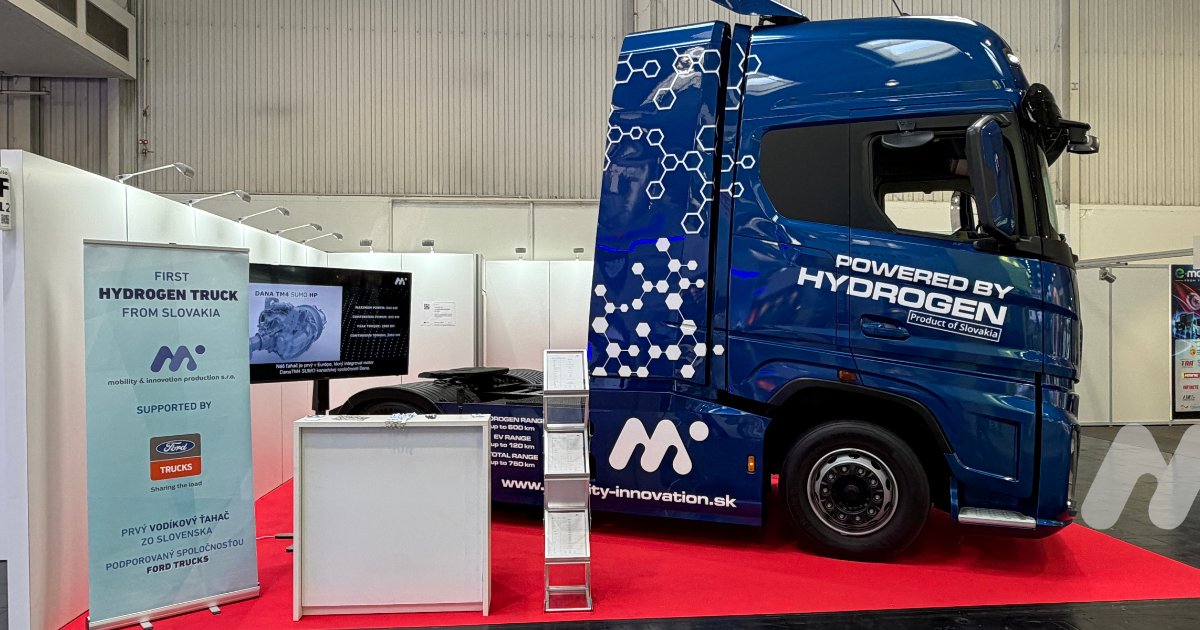
We did not bring an exhibit to IAA Transportation 2026. Our type-approved hydrogen tractor arrived in Hanover under its own power.
With registration numbers, European type approval, and mileage that proved this was neither a show car nor a glimpse of future technology.
And that is exactly why no one spoke in terms of hypotheses when it came to him.
Visitors didn’t ask whether a hydrogen-powered truck could work. They were interested in how far it could go, where it would refuel, how much it could carry, how it is serviced, and what changes would be needed for it to work in their specific operations.
For MIP, the IAA was not merely a venue for presentations. It was a place where a finished vehicle was put to the test against the demands of the European market.
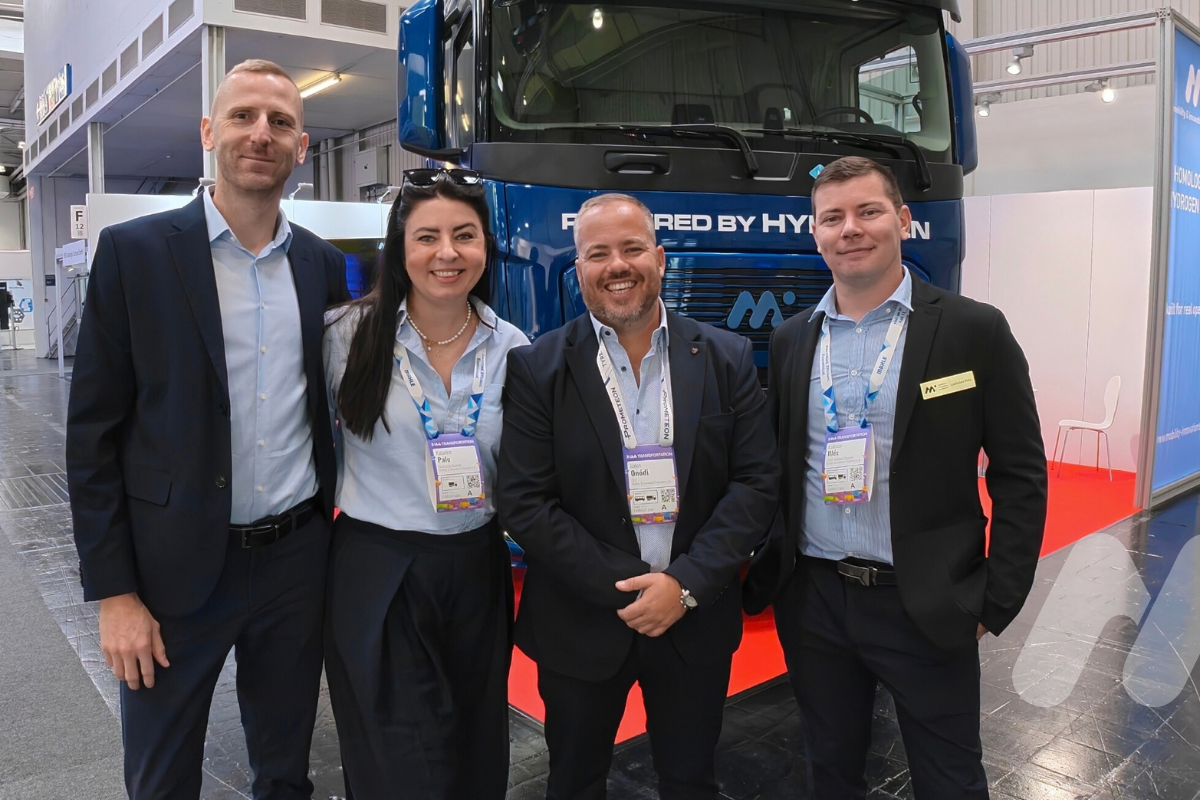
Mobility & Innovation Production Team
The truck wasn’t just a backdrop for the booth. It was the starting point for a conversation.
According to the organizer, IAA Transportation 2026 brought together more than 140,000 visitors and 1,589 exhibitors from 46 countries. In addition, 52% of respondents to the visitor survey indicated that they plan to make investments in the next six months.
However, the size of the exhibition alone does not determine its value. For us, the conversations that took place right next to the vehicle were what mattered most.
Transport companies, vehicle manufacturers, technology suppliers, and hydrogen infrastructure operators all gathered at the booth. Everyone viewed the truck from a different perspective.
Carriers were interested in range, fuel economy, payload capacity, and service. Gas station operators focused on the fuel nozzle, system pressure, and compatibility with existing infrastructure. Technology partners addressed individual interfaces and opportunities for further development.
The media and visitors often asked whether the truck was actually type-approved and whether it was used outside the exhibition grounds. The simplest answer was the registration numbers themselves and the route the vehicle had taken to Hanover.
When you stand in front of a working vehicle, the discussion quickly shifts from a general vision to specific conditions for its deployment.
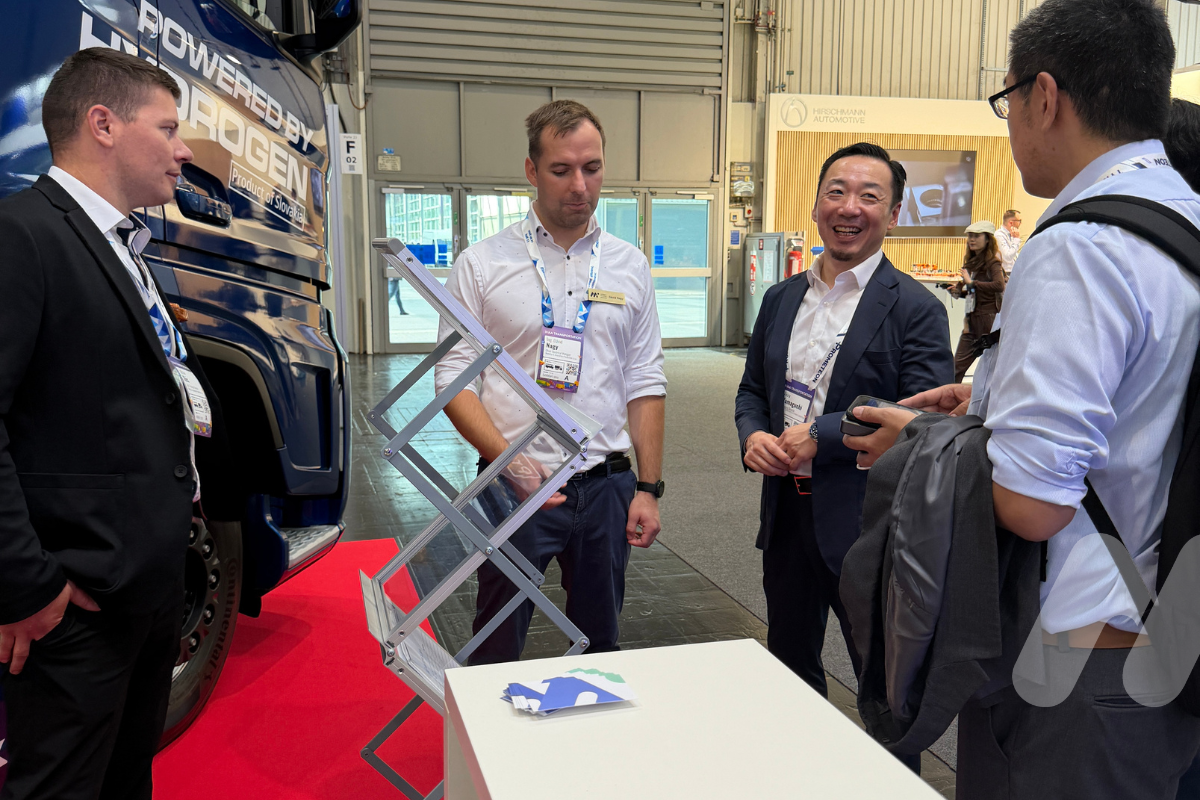
Mobility & Innovation Production Team and Visitors
The market wasn’t just interested in the technology
Driving range and refueling were among the first questions asked. But the conversations didn’t end there.
Visitors were curious about how the vehicle would perform in the event of an accident or fire. They asked about the safety of the high-pressure tanks, the difference in weight compared to a battery-powered truck, and the possibility of integrating a driver monitoring system.
Carriers also discussed factors that influence the actual purchase decision: price, service, production capacity, delivery times, and the vehicle’s future residual value.
This is an important shift. The market is no longer just assessing whether hydrogen technology is technically feasible. It is assessing whether it can integrate it into day-to-day operations and build a viable business model around it.
That is precisely why it is not enough to simply provide a good fuel cell, fuel tank, or electric motor. Customers need a complete solution: a vehicle, the right configuration, infrastructure, service, financing, and a clear deployment plan.
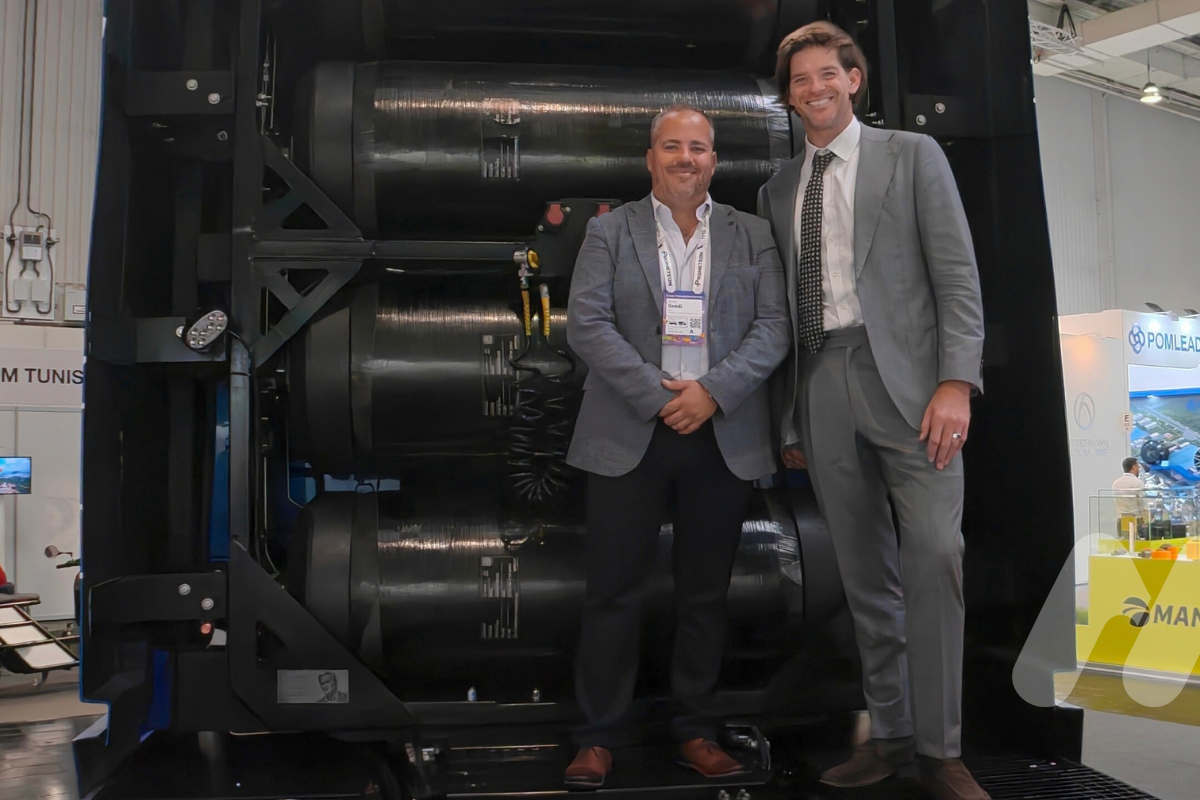
Mobility & Innovation Production x NPROXX
One configuration cannot work everywhere
At the IAA, Europe, in all its technical diversity, came together at our booth.
The Dutch market has different requirements for total weight, wheelbase, and axle load than Central Europe. The Scandinavian countries have additional weight and operational specifications. Italy and Spain, in turn, offer different levels of infrastructure, regulatory conditions, and business environments.
Discussions have emerged from the Netherlands regarding a 50-metric-ton configuration with a longer wheelbase and higher rear-axle load capacity. In Sweden, we noted direct interest from a carrier that is already well acquainted with the capabilities of 700-bar refueling. Further discussions have opened up opportunities in Italy, Germany, and Spain.
The possibility of preparing future vehicles for ADR transport also sparked a strong reaction.
Each of these examples confirms the same thing: a successful zero-emission vehicle is not created by simply copying a single configuration for every market.
It must be based on the specific operations—including routes, load capacity, available infrastructure, service options, and local legislation.
And this is where the work of a systems integrator begins.
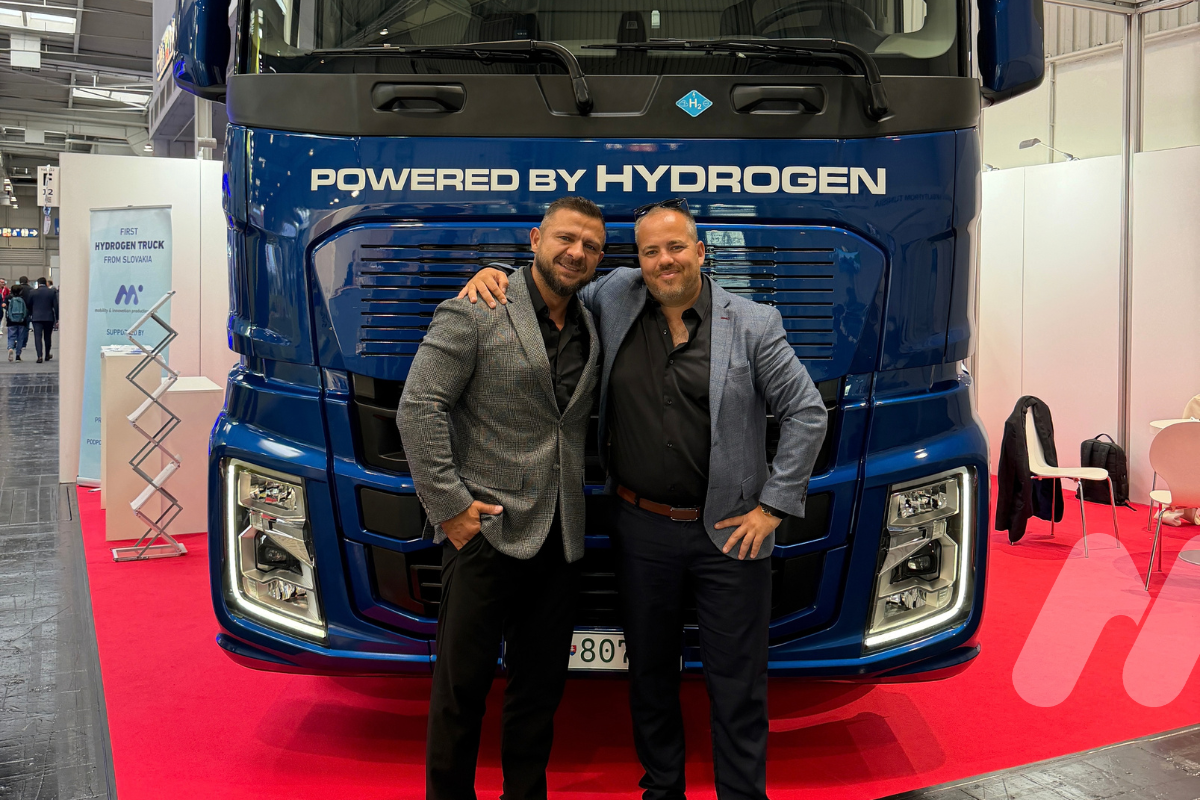
Mobility & Innovation Production x DRABPOL
The partnerships were visible right inside the vehicle
The hydrogen truck combines technologies from several specialized companies.
Ford Trucks provides the base platform. NPROXX supplies high-pressure hydrogen storage technology. DANA, DRABPOL, and Eaton contribute technologies and expertise in the areas of electric propulsion, steering, and transmission systems.
However, the mere presence of high-quality components is not enough to create a functional truck.
Someone has to decide how the technologies will be integrated into the vehicle, how they will be mechanically and electrically connected, how they will communicate, and how the system will manage the flow of energy. Diagnostics, safety features, and responses to abnormal conditions must also be designed.
MIP oversees this task.
At the IAA, our partners were able to showcase their technologies to their own customers for the first time directly in a fully functional and type-approved vehicle. Not as individual components on a display stand, but as part of a system that had traveled to Hanover by road.
That’s also why face-to-face meetings by the truck carried more weight. Instead of discussing what might happen in the future, we talked about what’s already working and how we can build on it.
During the exhibition, we also continued our discussions with fuel cell manufacturers and other technology companies. This allows us to expand the range of options available to us for future projects.
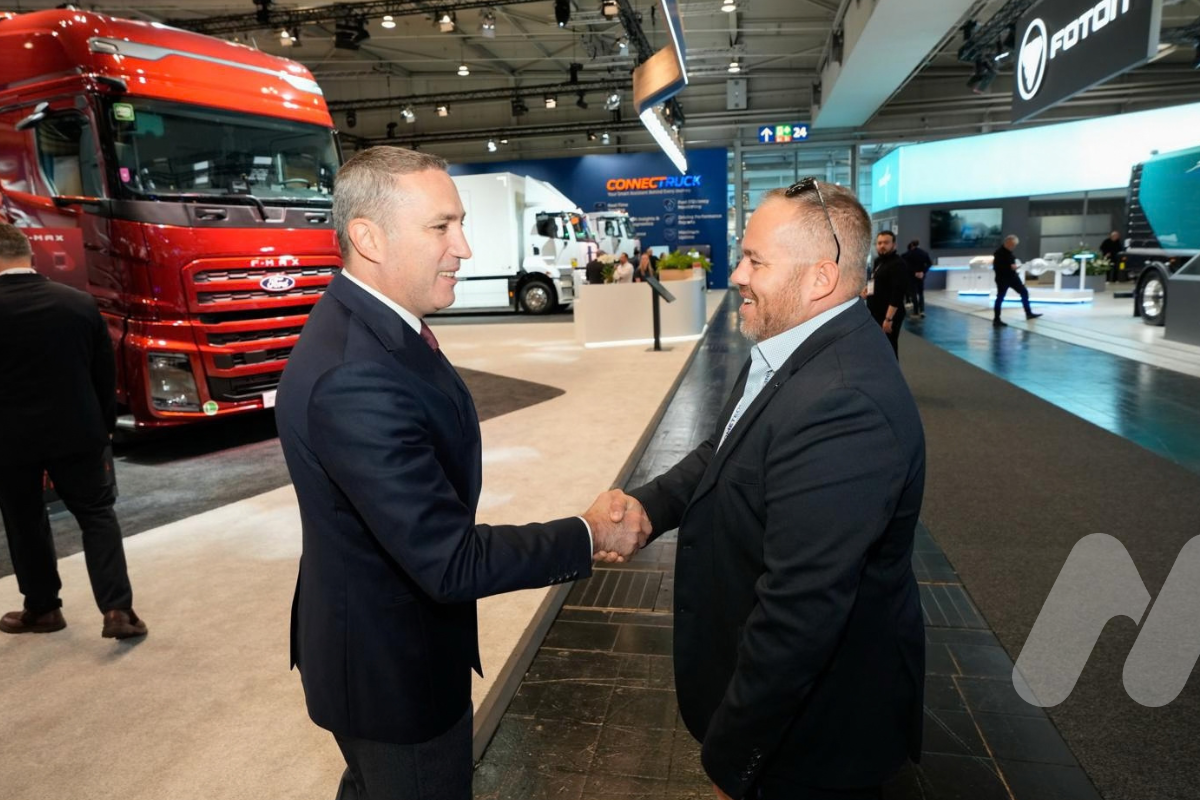
János Onódi, CEO of Mobility & Innovation Production, and Emrah Duman, Vice President of Ford Otosan
The most important question wasn’t how many trucks we produce
Many visitors asked us whether we are a vehicle manufacturer or a systems integrator.
The answer is important because it determines where the main value of MIP is generated.
The hydrogen truck is our product. At the same time, however, it is tangible evidence of our much broader expertise.
It demonstrates that we can integrate a high-pressure hydrogen system, a fuel cell, a battery, an electric motor, a transmission, power electronics, software, diagnostics, and safety features into a single unit.
That is why the truck is not the limit of our capabilities. It serves as a benchmark for what we can design and integrate for other vehicles, machines, and technology platforms as well.
We can get involved in a project as early as the initial concept and feasibility study. We then proceed with technical design, system architecture, technology selection, integration, software development, testing, and documentation. We prepare the final product for subsequent certification, homologation, or implementation steps.
It was precisely the truck at the IAA that sparked new discussions about integration projects, which do not necessarily have to result in the purchase of a finished vehicle. Potential customers and technology suppliers saw it as proof that we can take their platform or technology from a technical concept to a functional system.
The IAA has confirmed where our opportunity lies
Competition in zero-emission freight transport is growing. The exhibition featured a stronger presence of new manufacturers as well as rapid technological advancements.
However, technology alone will not win over the European market.
The deciding factor will be the ability to adapt it to local conditions, integrate it with the vehicle’s other systems, and prepare it to meet European technical and regulatory requirements.
Our opportunity, therefore, is not to manufacture a single truck for everyone. It lies in our ability to create solutions for specific platforms, operations, and markets.
A physical demonstration of the truck showcased this capability better than any presentation could.
The work doesn’t end after Hannover
The exhibition lights went out, but the most important part didn’t begin until after we returned.
We are continuing technical and commercial negotiations with carriers, vehicle manufacturers, technology suppliers, and hydrogen infrastructure operators.
Together with our partners, we are working on the platform’s further development, configurations for various European markets, and possibilities for future ADR applications. At the same time, we are evaluating new technologies and opportunities for additional integration projects.
Thank you to everyone who stopped by our truck in Hannover. Thank you for the in-depth questions. Thank you for the honest feedback. And especially thank you for the conversations that don’t end with the exchange of business cards.
Do you have a vehicle, machine, or technology platform into which you need to integrate a hydrogen or other zero-emission system?
Please contact our engineering team. Let’s work together to determine what the solution needs to be able to handle in your specific application.
Read also
How did our hydrogen-powered tractor perform outside the exhibition grounds? Read about the results of the real-world logistics testing conducted with METRANS.
