How to Prepare a Hydrogen Propulsion System for Certification or Type Approval
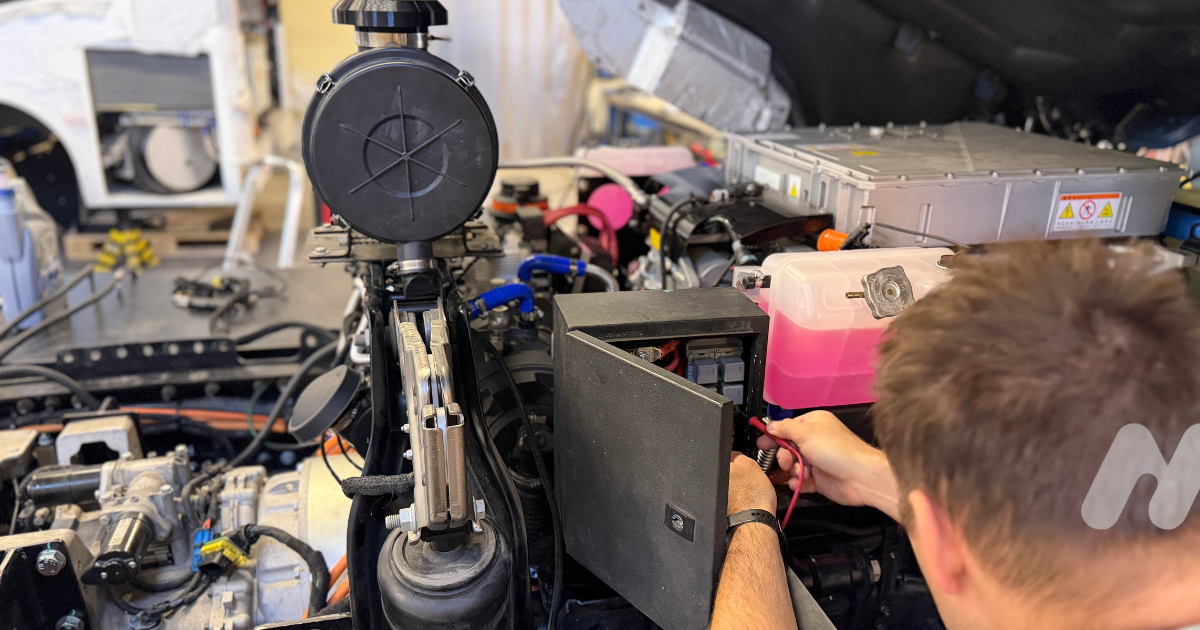
With a hydrogen propulsion system, preparations for certification or type approval do not begin only after the development team has finalized the technical design.
Technical decisions, safety logic, diagnostics, testing, and documentation are all developed during the design and integration phases. It is precisely these areas that form the basis for further technical and regulatory steps.
It is therefore important for customers to distinguish between a system that works from a technical standpoint and a solution that is ready to undergo testing, certification, or type approval.
First, it must be clear which solution will be evaluated
A hydrogen propulsion system consists of several interconnected components. Hydrogen serves as the energy source; a fuel cell converts it into electricity; and an electric motor provides the propulsion.
The final architecture also incorporates a high-pressure hydrogen system, a battery, power electronics, energy management, software, diagnostics, and safety logic.
Therefore, simply knowing the parameters of individual components is not enough before proceeding to the next stages of approval. The development team must precisely define both the integrated solution and its technical interfaces.
For example, the interaction between the fuel cell and the battery, energy flow management, communication between the hydrogen system and the control system, and the response of the entire system to changes in operating conditions all play an important role.
Security features are incorporated right from the design phase
Safety directly affects the architecture of the hydrogen propulsion system.
Design engineers therefore address the high-pressure system, monitoring, safety conditions, diagnostics, and the system’s response to a failure or non-standard situation right from the design phase.
At the same time, security logic integrates hardware, control systems, and software. Therefore, the development team cannot address it as a standalone task just before testing.
The proposal also specifies the physical location of the individual components of the system and how they are interconnected.
Subsequent testing then verifies whether the system responds according to the designed logic and whether its behavior remains predictable even under non-standard conditions.
The diagnostic report must explain what is happening in the system
With an integrated propulsion system, it’s not enough to simply know whether it works.
The technical team also needs to know the system’s current status, the cause of a specific response, and how the system assessed the error that occurred.
Diagnostics therefore plays an important role during both development and testing.
It helps monitor communication between subsystems, track operational statuses, and identify areas where the software, control systems, or the integration itself need to be adjusted.
Before taking any further technical steps, the team must be able not only to observe the system’s behavior but also to evaluate it in a meaningful way.
Testing provides technical evidence
Testing a hydrogen propulsion system is not just about verifying that the system starts up and that the vehicle or machine operates.
During development, the team monitors, for example, behavior under varying loads, the interaction between the fuel cell and the battery, communication between subsystems, safety modes, diagnostics, and responses to error conditions.
The results provide developers with feedback and, at the same time, serve as a technical basis for further evaluation of the solution.
If a test reveals a problem, the team can adjust the control system, software, diagnostics, integration, or technical solution for a specific part of the system.
This approach allows the system to continuously verify and prepare for the next technical steps even during development.
The documentation must correspond to the actual design.
Technical documentation links the design, integration, testing, and subsequent approval steps.
It documents the system architecture, technical design, security and operational statuses, diagnostics, test results, and other relevant technical documentation.
Its role does not end with simply recording what the development team has created. Documentation helps keep the solution understandable, verifiable, and ready for further review.
That is why the team creates and updates it alongside the technical solution, rather than retroactively after the project is completed.
Certification and type approval are not always the same process
The specific next step depends on the type of application and the requirements that apply to it.
For vehicle-based solutions, the project may be aimed at type approval. Other machinery or technology platforms may require certification, a technical assessment, or another approval process.
A system integrator must therefore be aware of how the system will be used in the future as early as the solution design phase.
If the team waits until the integration is complete before addressing further approval requirements, it may find itself needing to change technical decisions that have already been made.
Certification or type approval readiness therefore influences the technical direction of the project even before the actual testing begins.
What to Prepare Before the Next Approval Step
The exact scope depends on the specific application. From a system integration perspective, however, the project needs to address several key areas:
- Define the system’s architecture and technical configuration.
- Verify the functional interfaces between the individual subsystems.
- Configure the system’s security logic and responses.
- Develop diagnostics and methods for evaluating operational conditions.
- Evaluate the results of relevant testing and validation.
- Prepare technical documentation and supporting materials for further testing.
These areas are not created as a single, final checklist separate from development. The technical team gradually creates, verifies, and updates them during the design, integration, and testing phases.
MIP’s Role: Prepare the system for the next step
Mobility & Innovation Production participates in projects as a technology partner for the comprehensive system integration of hydrogen and zero-emission powertrains.
Our work does not end with the installation of a fuel cell or a high-pressure hydrogen system in a vehicle, machine, or technological platform.
We design, integrate, and test the solution with an eye toward what the project will need in its subsequent phases.
We therefore include technical architecture, security logic, management, software, diagnostics, testing, and documentation in the process.
The goal is to prepare an integrated system for the agreed-upon next steps regarding technical, certification, or type-approval procedures.
That is precisely what distinguishes the mere connection of components from comprehensive system integration.
Certification or type approval does not begin with the final test. The development team prepares the system for it throughout the entire technical process.
FAQ
Is certification or type approval the final step in the development process?
No. The technical team prepares the system for subsequent approval steps as early as the design, integration, testing, and documentation phases.
What needs to be prepared before the next approval?
The scope depends on the specific application. It is primarily based on the defined system architecture, security logic, diagnostics, the results of relevant testing, and technical documentation.
Are certification and type approval the same thing?
Not always. The type of subsequent approval process depends on the vehicle, machine, or technology platform, as well as on the requirements applicable to the specific solution.
Read also
Hydrogen Propulsion System: How Hydrogen, Fuel Cells, and Electric Propulsion Work Together
When Technology Isn’t Enough: Why Complex Technological Solutions Require Systems Thinking
Is your project ready for implementation? 7 questions to check
