Ostrava → Sosnowiec: MIP hydrogen-powered tractor-trailer in actual international transport
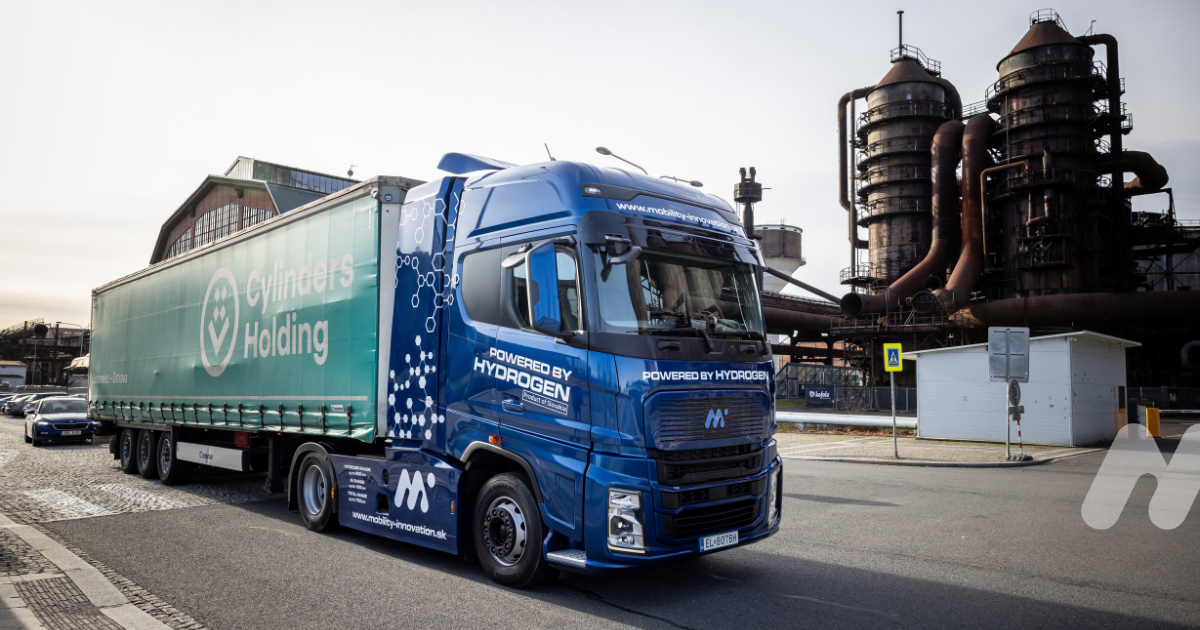
From hydrogen refueling to delivery of the cargo to the customer. The Ostrava → Sosnowiec route showcased the MIP hydrogen tractor in a real-world logistics scenario—with a loaded trailer, on public roads, and across the border between the Czech Republic and Poland.
This time, it was neither a demonstration run nor a standalone technical test. The goal was practical: to transport high-pressure steel cylinders for hydrogen technologies from Vítkovice Cylinders in Ostrava to its sister company, Vítkovice Milmet, in Sosnowiec, Poland.
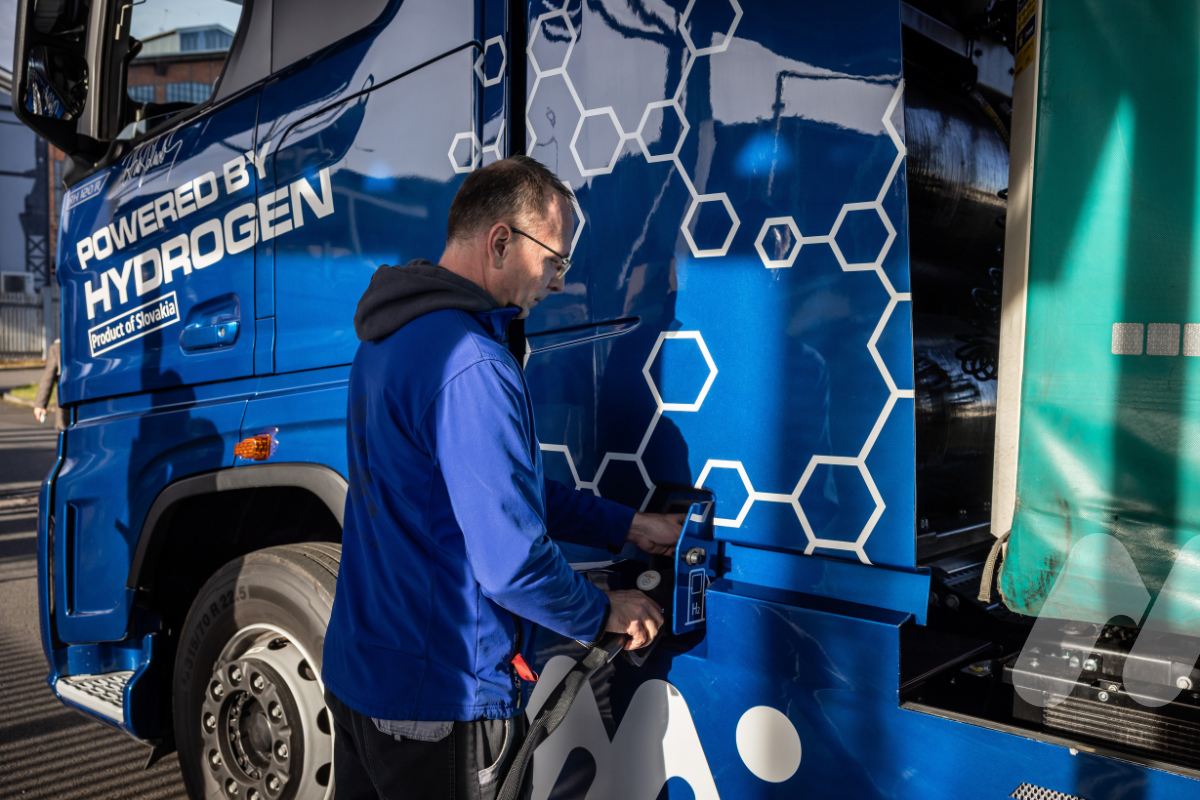
The journey began at a hydrogen refueling station in Ostrava
The first step was refueling with hydrogen at the station in Dolní Vítkovice. It was here that the infrastructure, the vehicle, and the specific logistical task all came together.
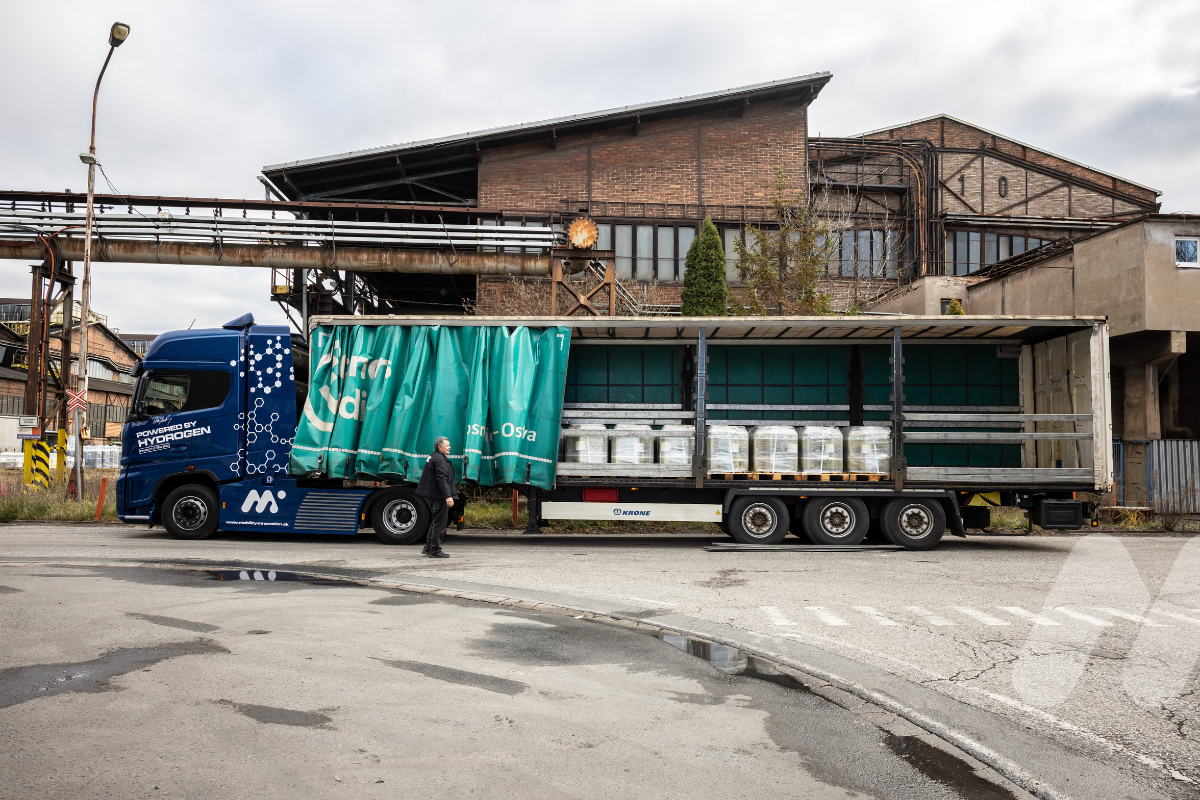
After refueling with hydrogen, the driver continued on to the next part of the mission. The truck was no longer traveling as an empty demonstration vehicle. On the route to Poland, it was carrying actual industrial cargo.
Operational parameters:
700-bar hydrogen system · capacity of 48 kg H₂ · range of 600–750 km per fill · refueling time of approximately 10 minutes
A loaded truck changes the nature of the entire trip
The most important moment of this route wasn’t the departure from the station itself. It was the fact that the truck continued on with a full logistics order.
The cargo consisted of high-pressure steel cylinders intended for hydrogen technologies. The vehicle transported them from the Vítkovice Cylinders plant across the Czech-Polish border to Sosnowiec.
This type of driving puts the technical specifications in a different context. Range, energy management, payload, trailer handling, and the vehicle’s handling itself are no longer evaluated separately. Everything comes together in a single, specific logistics task.
Ostrava → Sosnowiec: Across the Border to the Customer
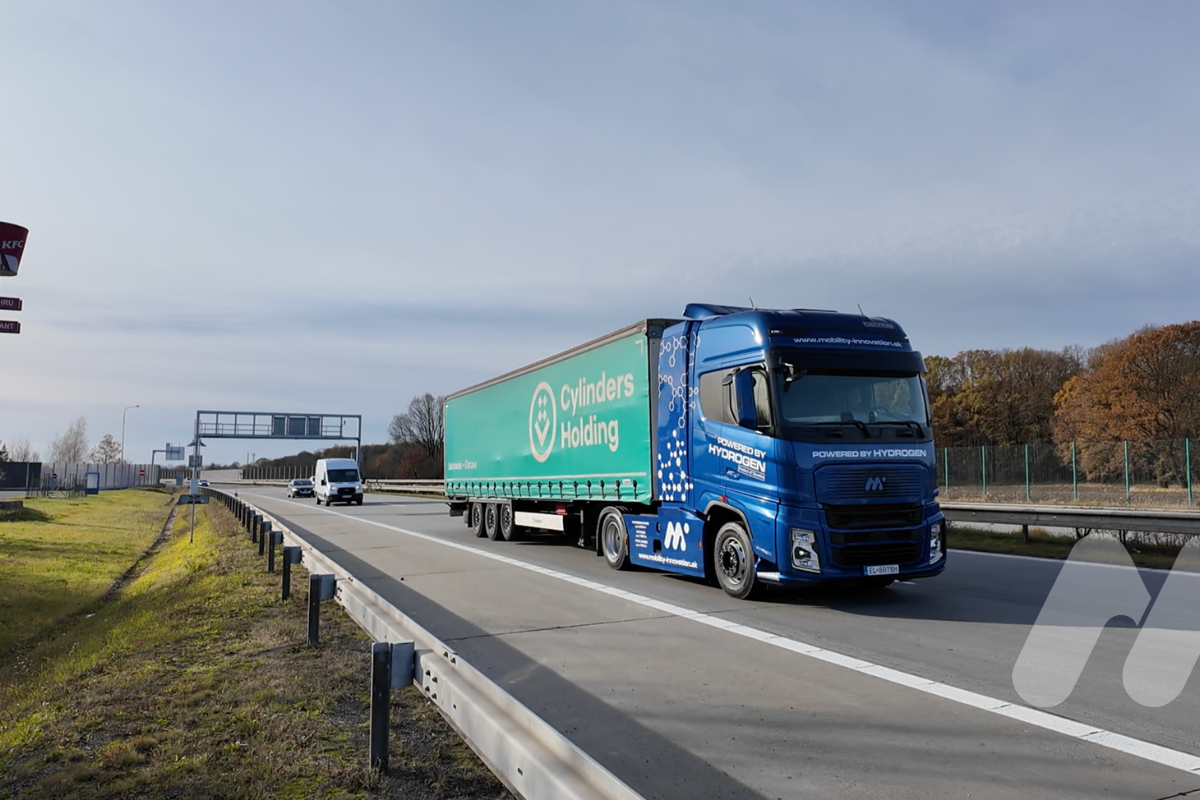
After leaving Ostrava, the hydrogen-powered tractor-trailer continued along regular roads toward Poland. The route included a cross-border leg and ended directly at the Vítkovice Milmet facility in Sosnowiec.
The result, therefore, was not the number of kilometers recorded during the test. The result was the delivery of an actual shipment to a specific destination.
This type of experience is crucial for the further deployment of zero-emission vehicles. It shows how the vehicle performs under conditions that closely resemble a carrier’s day-to-day operations—from loading to driving to delivery.
This result would not have been possible without our partners
This test drive also served as an example of collaboration among various parts of the hydrogen ecosystem.
The Moravian-Silesian Hydrogen Cluster has long been connecting companies, the public sector, and professional organizations working in the region to develop hydrogen projects and infrastructure.
Cylinders Holding and Vítkovice Cylinders provided a specific industrial context and logistical challenge. The shipment was headed to Vítkovice Milmet in Poland, thereby combining manufacturing, hydrogen infrastructure, and cross-border transport into a single project.
We would like to thank the Moravian-Silesian Hydrogen Cluster, Cylinders Holding, Vítkovice Cylinders, and all participating partners for their cooperation and for the opportunity to test hydrogen mobility in a specific industrial application.
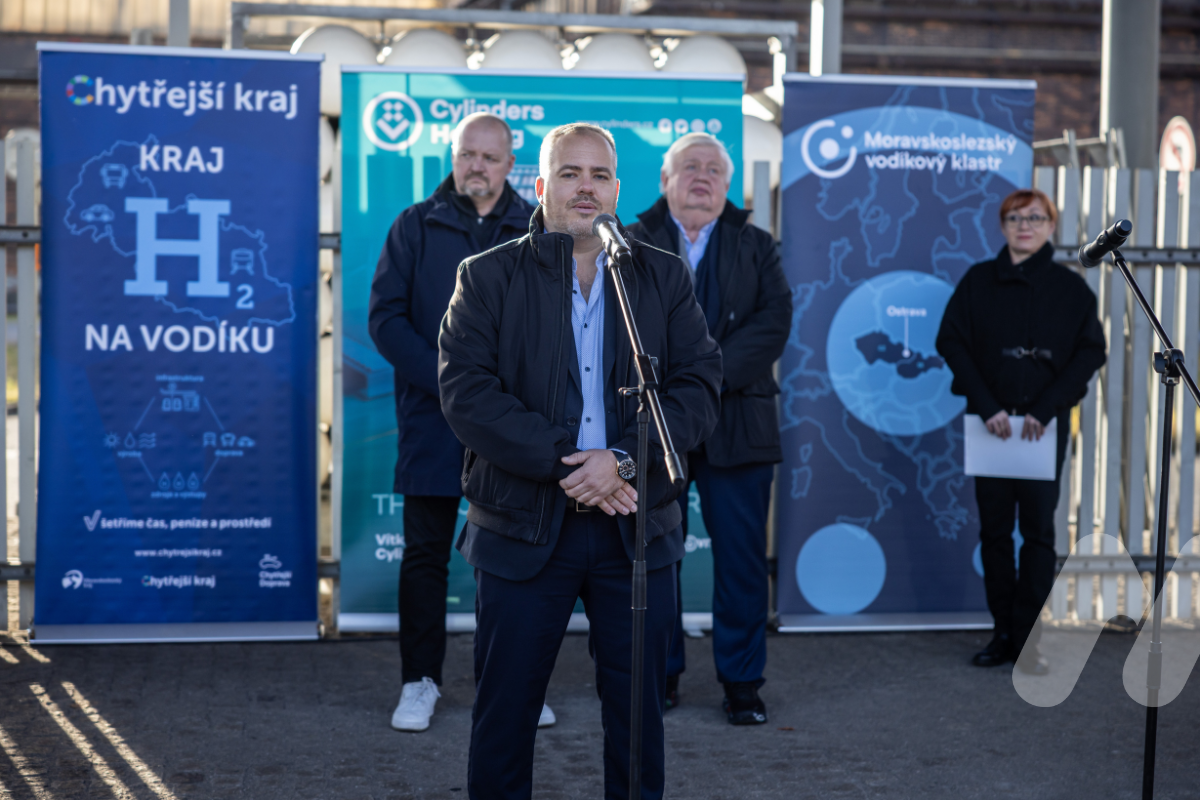
The actual drive also attracted media attention
The first international transport of a hydrogen-powered tractor-trailer from Ostrava to Sosnowiec sparked interest even outside the hydrogen and logistics sectors themselves.
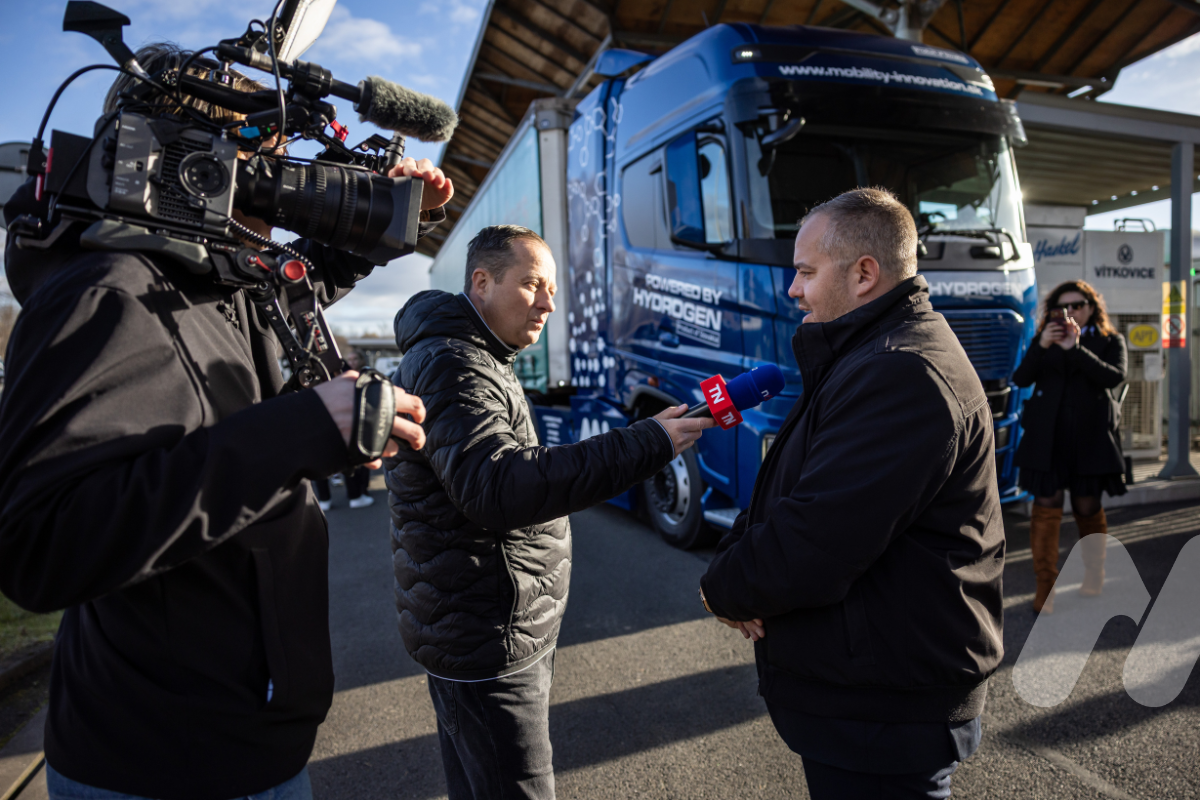
The ride was covered by both national and regional media. Television reports were broadcast by Czech Television / ČT24, TV NOVA and TV POLAR.
The topic was also covered by several online media outlets, including České noviny / ČTK, iDNES.cz, PATRIOT Magazine, Eurologport, Svět hospodářství, EnviWeb, and Ekolist.
The main focus of media coverage was not the technology itself, but a specific outcome: a hydrogen-powered truck set out on a cross-border route and delivered actual industrial cargo to a customer. It is precisely this type of application that shifts the discussion on hydrogen mobility from the presentation of the technology to its practical deployment.
What does this trip mean for MIP?
For MIP, the hydrogen truck is more than just a standalone product. It is the result of work on a complete powertrain architecture—from the high-pressure hydrogen system and fuel cell, through the battery and electric drive, to energy management, software, diagnostics, and safety logic.
On the Ostrava → Sosnowiec route, these technical aspects were not evaluated in isolation. The result was simple and measurable: the vehicle received energy, loaded the cargo, completed the international route, and delivered it to its destination.
For a systems integrator, this kind of output serves as an important proof of concept—technical decisions are translated into a solution capable of fulfilling a specific operational task.
From Components to a Specific Application
MIP applies the same principle to other projects as well. The customer does not need to look for a single, universal technology. They need a solution designed for a specific platform, operating conditions, and the desired outcome.
The role of a systems integrator is to integrate technologies, define the architecture and interfaces, prepare management, testing, and documentation, and bring the system to a state in which it can proceed to actual deployment or further certification or homologation steps.
The route between Ostrava and Sosnowiec is one specific example of what this outcome might look like in practice.
Do you have a vehicle, machine, or other platform and are you looking to integrate a hydrogen or zero-emission powertrain?
MIP provides support from feasibility studies and architectural design through system integration and testing to documentation and preparation of the solution for further technical or regulatory steps.
