How hydrogen vehicle development works: the journey from design to first kilometres
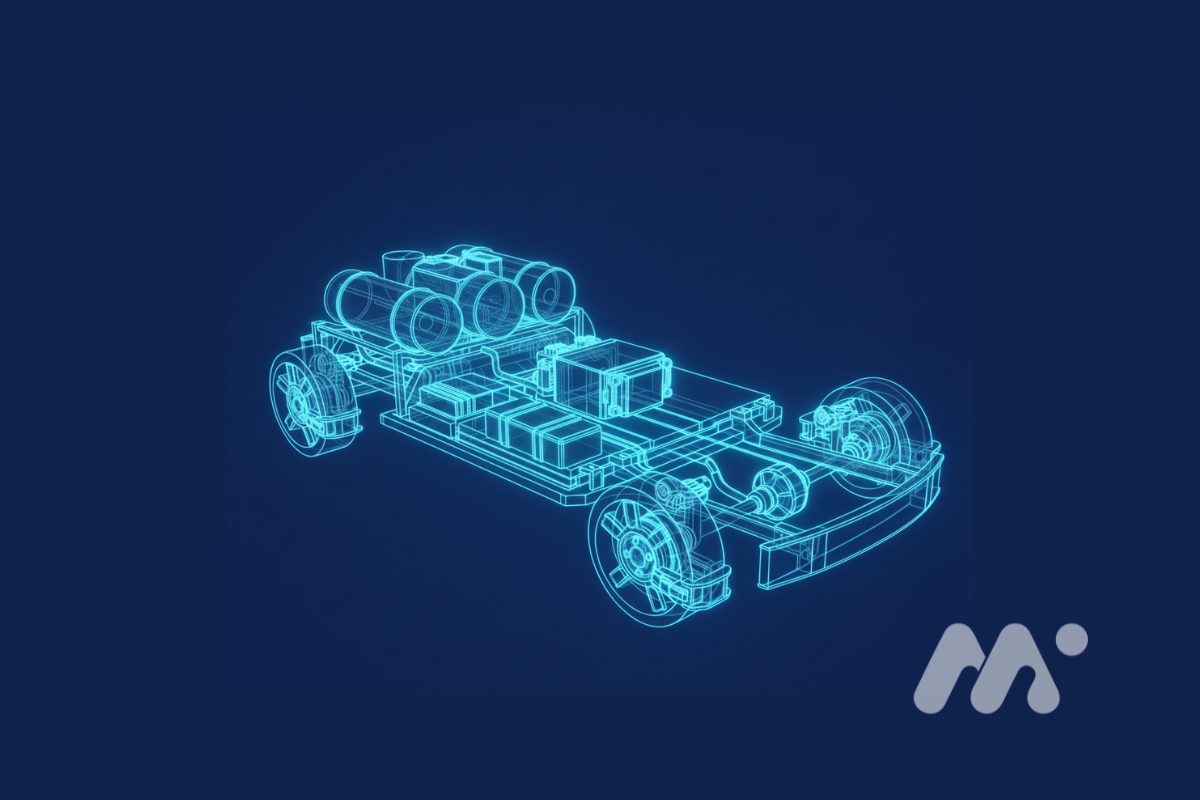
Developing a hydrogen vehicle is a process that doesn’t start with manufacturing or driving down the road. It starts with understanding real transport needs and designing a solution that must work in practice.
At Mobility & Innovation Production, we take a systematic approach to hydrogen vehicle development. Each step has a clear meaning and builds on the previous one. In this article, we will explain what the entire process looks like – from the initial idea to the moment the vehicle moves for the first time.
1. Hydrogen vehicle development starts with questions
Every hydrogen vehicle development starts with defining the goal. The technology is never first in line. We ask questions first:
- ▪️ What type of transport should the vehicle provide?
- ▪️ In what environment will it ride?
- ▪️ What range and power are needed?
It is the answers to these questions that determine whether hydrogen propulsion is the right solution. We see hydrogen as a tool, not a one-size-fits-all answer.
2. Conceptual vehicle design
Once the initial requirements are clear, the development of the hydrogen vehicle moves into the conceptual phase. This is where the basic architecture of the vehicle is developed.
The team mainly addresses:
- ▪️ arrangement of hydrogen tanks,
- ▪️ basic energy concept,
- ▪️ spatial capabilities of the individual components.
At this stage nothing is running yet, but the decisions have a long-term impact on the whole project. Therefore, the focus is on safety, service access and future flexibility of the solution.
3. Digital design and simulation
Modern hydrogen vehicle development cannot do without digital tools. The vehicle is first created in a 3D model where its properties are verified.
Simulations help:
- ▪️ optimize weight distribution,
- ▪️ prevent component collisions,
- ▪️ to verify thermal and power loads.
This enables the development team to eliminate risks before physical production.
4. First physical solutions
After the digital phase comes the production of the first real parts. The development of the hydrogen car moves from the screen to the workshop at this point.
Emerging:
- ▪️ load-bearing structures,
- ▪️ component holders,
- ▪️ protective elements.
These first physical solutions show how well the design works in reality. Modifications are a natural part of development and help to fine-tune the details.
5. Safety as part of development
Safety plays a key role in the development of a hydrogen vehicle. It does not come at the end, but is present at every stage.
For example:
- ▪️ protection of pressure systems,
- ▪️ logic of retaliation,
- ▪️ location of sensitive components.
Such an approach creates the basis for a reliable and sustainable solution.
6. First set-up and first movements
The turning point in the development of a hydrogen vehicle is the first assembly. The vehicle moves for the first time, often still in a controlled environment.
Even a short movement confirms that the design, calculations and the work of the team were heading in the right direction. From this point on, the project moves closer to real operation.
Development as the basis for functional emission-free mobility
The development of a hydrogen vehicle is a long-term process that relies on technical precision and the right decisions. Only rigorous preparation creates the space for emission-free operation that makes sense in the real world.
At Mobility & Innovation Production, we believe that quality development is the foundation of any successful innovation in transport.
FAQ – Frequently asked questions about hydrogen vehicle development
How long does it take to develop a hydrogen vehicle?
The length of development depends on the type of vehicle, its use and performance or range requirements. Development is therefore always carried out individually according to the specific task.
Is hydrogen propulsion safe in the development phase?
Yeah. Safety is part of every step of development – from design to the first movements of the vehicle. Multiple safety features and protection mechanisms are at work.
Why is it important to spend time on conceptual design?
The conceptual design determines the basic characteristics of the vehicle. The right decisions at this stage significantly affect reliability, safety and future operation.
Can the development of a hydrogen vehicle be tailored to a specific application?
Yeah. Development is always based on real transport needs, so solutions are tailored to specific operating conditions.